



Calcium Channel
Ca2+ channels; Ca channels
Calcium channel is an ion channel which displays selective permeability to calcium ions. It is sometimes synonymous as voltage-dependent calcium channel, although there are also ligand-gated calcium channels. Voltage-gated calcium (CaV) channels catalyse rapid, highly selective influx of Ca2+ into cells despite a 70-fold higher extracellular concentration of Na+. Some calcium channel blockers have the added benefit of slowing your heart rate, which can further reduce blood pressure, relieve chest pain (angina) and control an irregular heartbeat.
Calcium Channel Isoform Specific Products
All Product Categories
-
Calcium Channel Inhibitors
(586)
View all products
-
Calcium Channel Agonists
(35)
View all products
-
Calcium Channel Antagonists
(210)
View all products
-
Calcium Channel Activators
(85)
View all products
-
Calcium Channel Modulators
(45)
View all products
-
Calcium Channel Chemical
(1)
View all products
-
Calcium Channel Inducers
(11)
View all products
-
Calcium Channel Controls
(10)
View all products
-
Calcium Channel Ligands
(7)
View all products
-
Calcium Channel Related Products (1226)
Related Products (1226)

-
Antibodies (29)
-
Related Compound Screening Libraries (1)
-
Calcium Channel Isoform Comparison
-
2-Chloro-ATP sodium
 0 Images2-Chloro-ATP sodium (2-Chloro ATP) is an adenine nucleotide and an analog of ATP. It is an antagonist of the purinergic P2Y1 receptor and inhibits intracellular calcium mobilization induced by ADP (HY-W010918) in Jurkat cells expressing the human receptor (Ki=2.3 μM). 2-Chloro-ATP sodium is an agonist of the purinergic P2X receptor and induces inward currents in HEK293 cells expressing human bladder smooth muscle or rat PC12 forms of the receptor (EC50=0.5 and 2.5 μM). 2-Chloro-ATP sodium induces relaxation of precontracted guinea pig cecal strips in a concentration-dependent manner. 2-Chloro-ATP sodium has been used to study the substrate specificity of cyclic nucleotide-dependent protein kinases such as protein kinase A (PKA) and PKG.
-
Palmitoylglycine-d31
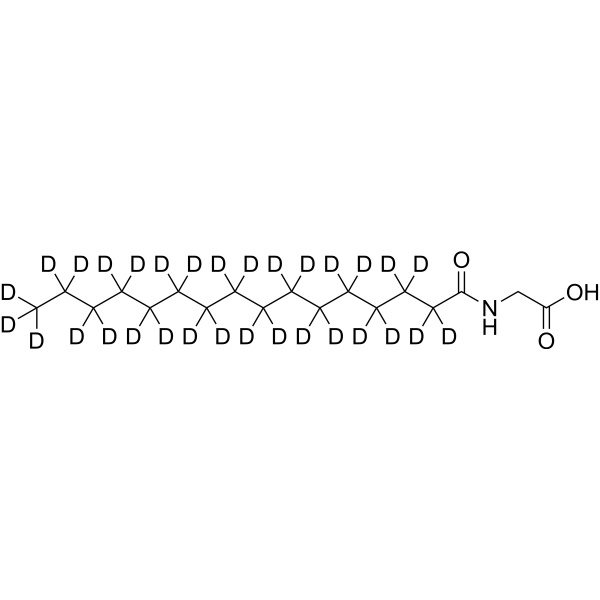 0 ImagesCat. No.: HY-W074890SPurity: 99.40%Synonyms: N-palmitoyl glycine-d31Palmitoylglycine-d31 is the deuterium labeled Palmitoylglycine.
-
D-myo-Inositol-1,2,4,5,6-pentaphosphate sodium salt
 0 ImagesCat. No.: HY-175087Purity: 98.0%Synonyms: Ins(1,2,4,5,6)P5 sodium salt; 1,2,4,5,6-IP5 sodium saltD-myo-Inositol-1,2,4,5,6-pentaphosphate (Ins(1,2,4,5,6)P5) sodium salt is one of several different inositol oligophosphate isomers involved in signal transduction. In human Jurkat T lymphocytes, Ins(1,2,4,5,6)P5 (sodium salt) is phosphorylated to InsP6 by 1/3 kinase. D-myo-Inositol-1,2,4,5,6-pentaphosphate sodium salt is involved in calcium signaling.
-
Crisugabalin
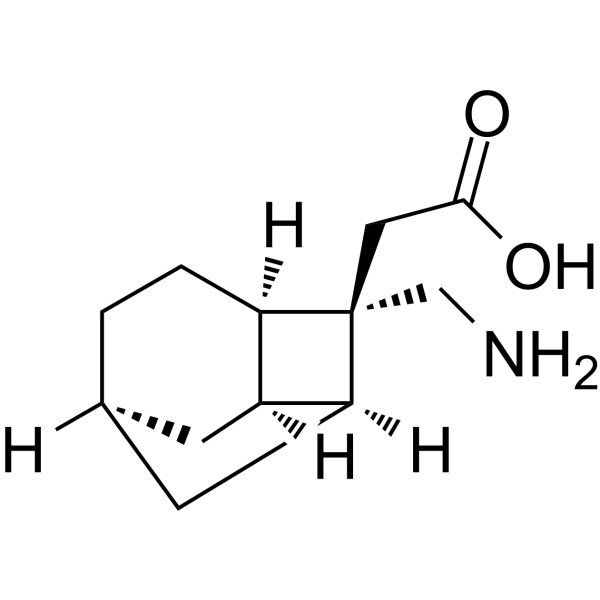 0 ImagesSynonyms: HSK16149Crisugabalin is an orally active, selective ligand for the α2δ subunit of voltage-gated calcium channels, with a target IC50 of 3.96 nM in rats. Crisugabalin inhibits the binding of [3H]gabapentin to the α2δ subunit, reduces calcium influx, decreases neuronal excitability, and impairs nociceptive transmission. Crisugabalin alleviates mechanical allodynia, neuropathic pain and inflammatory pain in rats, and reduces phase II pain behaviors. Crisugabalin can be used in research related to chronic pain, neuropathic pain, diabetic neuropathy, fibromyalgia, inflammatory pain, diabetic peripheral neuropathy and postherpetic neuralgia.
-
Diltiazem-d3 hydrochloride
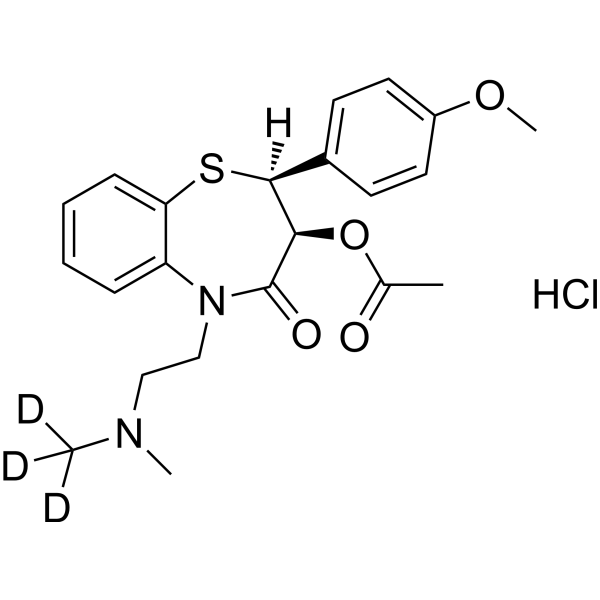 0 ImagesDiltiazem-d3 (hydrochloride) is the deuterium labeled Diltiazem hydrochloride. Diltiazem hydrochloride is a Ca2+ influx inhibitor (slow channel blocker or calcium antagonist)[1][2].
-
Brompheniramine
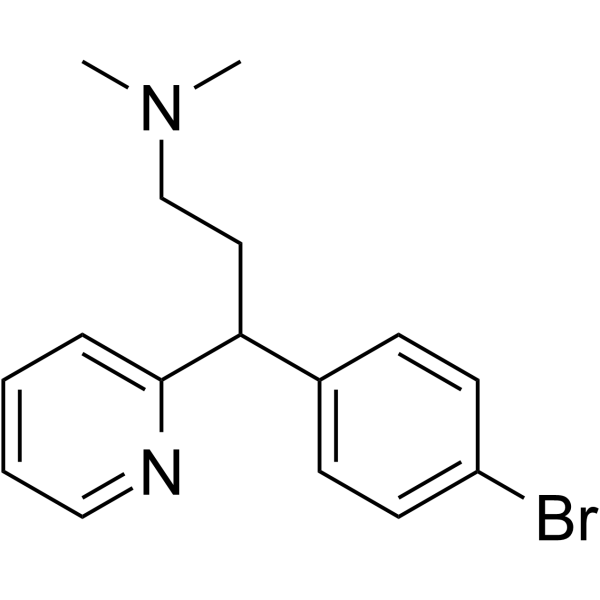 0 ImagesBrompheniramine ((±)-Brompheniramine) is a potent and orally active antihistamine of the alkylamine class. Brompheniramine is a selective histamine H1 receptor antagonist with a Kd of 6.06 nM. Brompheniramine can block the hERG channels, calcium channels, and sodium channels with IC50s of 0.90 μM, 16.12 μM and 21.26 μM, respectively. Brompheniramine has anticholinergic, antidepressant and anesthetic properties and can be used for allergic rhinitis research.
-
Caloxin 1b3
 0 ImagesCat. No.: HY-P11292Purity: 99.81%Caloxin 1b3, a peptide, is a selective plasma membrane Ca2+ pump 1 (PMCA1) inhibitor. Caloxin 1b3 significantly inhibits PMCA1 Ca2+–Mg2+-ATPase in the rabbit duodenal mucosa than the PMCA4 in the human erythrocyte ghosts. Caloxin 1b3 also increases cytosolic Ca2+ concentration in endothelial cells. Caloxin 1b3 can be used for cardiovascular disorders research.
-
ω-Hexatoxin-Hv1a TFA
 0 ImagesCat. No.: HY-P5142ASynonyms: ω-ACTX-Hv1 TFA; ω-Atracotoxin-HV1 TFAω-Hexatoxin-Hv1a (ω-ACTX-Hv1; ω-Atracotoxin-HV1) TFA is an orally active insecticidal neurotoxin containing an inhibitor cystine knot motif and a selective calcium channel inhibitor. ω-Hexatoxin-Hv1a TFA blocks L-type voltage-dependent Ca2+ channels and reduces intracellular calcium ion concentration, thereby decreasing apoptosis, necroptosis and oxidative stress, and promoting cell recovery and energy level elevation. ω-Hexatoxin-Hv1a TFA causes larval paralysis and death by impairing neurotransmission in the central nervous system of insects. It shows high injectable toxicity against insects of multiple orders, but exhibits weak oral toxicity. ω-Hexatoxin-Hv1a TFA is widely applicable to studies related to ischemia-reperfusion injury, atopic dermatitis, and ischemic injury of cardiomyocytes and neurons.
-
(+)-Niguldipine hydrochloride
 0 ImagesSynonyms: (S)-Niguldipine hydrochloride(+)-Niguldipine hydrochloride is a 1,4-DHP receptor ligand associated with L-type Ca2+ channels (with Ki values of 85 pmol/L in guinea pig skeletal muscle, 140 pmol/L in brain, and 45 pmol/L in heart) as well as an α1-adrenergic receptor ligand (with a Ki value of 78 nmol/L). (+)-Niguldipine hydrochloride shows much higher binding selectivity for α1α-adrenergic receptors than for α1B-adrenergic receptors. (+)-Niguldipine hydrochloride can be used in studies related to hypertension.
-
ProTx-I
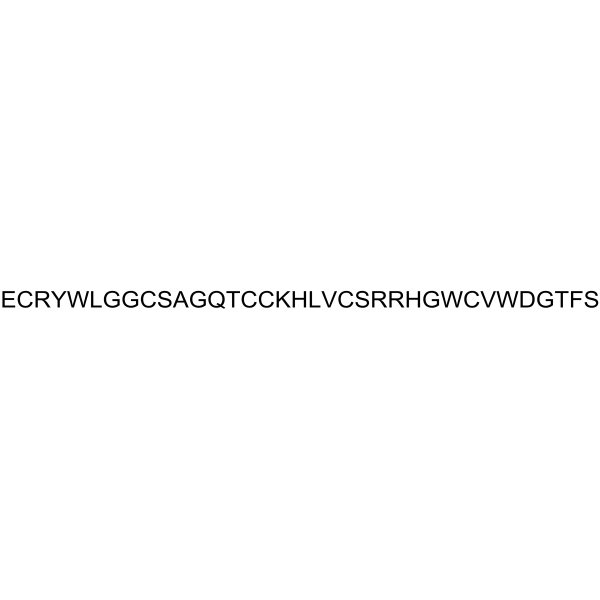 0 ImagesCat. No.: HY-P1073CAS No.: 484598-35-8ProTx-I is a toxin derived from Thrixopelma pruriens and a peptide inhibitor targeting TTX-resistant sodium channels. ProTx-I interacts with voltage sensors of multiple domains such as NaV1.7, reduces neuronal excitability through allosteric modulation of channel gating and alteration of voltage dependence. The IC50 values of ProTx-I against human NaV1.7, NaV1.2, NaV1.6, and NaV1.5 are 95 nM, 104 nM, 21 nM, and 358 nM, respectively; ProTx-I also potently inhibits Ba2+ currents of hCav3.1, while its inhibitory potency against hCav3.2 is approximately 160-fold lower. ProTx-I is applicable to the research of chronic pain.
-
TSLP modulator-1
 0 ImagesCat. No.: HY-181006Purity: 99.61%TSLP modulator-1 (Compound 14O) is a potent TSLP signaling modulator. TSLP modulator-1 exhibits potent inhibition of CCL17 and IL-1β mRNA expression. TSLP modulator-1 attenuates the protein levels of IL-6, IL-4 and IL-13. TSLP modulator-1 significantly attenuates calcium influx. TSLP modulator-1 exerts anti-inflammatory effects. TSLP modulator-1 effectively alleviates pruritus and atopic dermatitis-like symptoms.
-
Hexadecylphosphoserine TFA
 0 ImagesCat. No.: HY-165473APurity: 98.0%Hexadecylphosphoserine TFA is a phospholipid molecule that contains a long-chain alkyl (hexadecyl) and a phosphoserine group, giving it a high affinity for the cell membrane. Hexadecylphosphoserine TFA can exert antitumor activity by modulating [Ca++]i and its related signaling pathways, making it useful for research in the field of breast cancer.
-
Clopimozide
 0 ImagesClopimozide is an orally active antischizophrenic agent that inhibits [3H]nitrendipine binding with IC50 value of 17 nM. Clopimozide is a calcium channel antagonist. Clopimozide can be used for the research of negative and positive schizophrenic symptoms.
-
Flufenamic acid-13C6
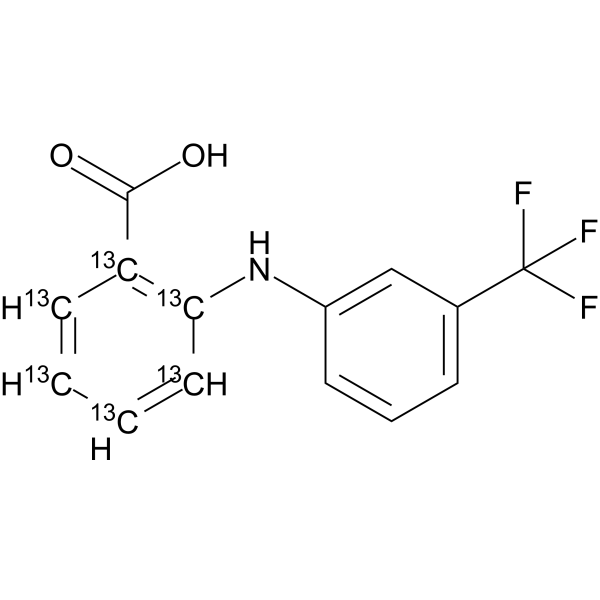 0 ImagesCat. No.: HY-B1221S1CAS No.: 1325559-30-5Flufenamic acid-13C6 is the 13C6 labeled Flufenamic acid. Flufenamic acid is a non-steroidal anti-inflammatory agent, inhibits cyclooxygenase (COX), activates AMPK, and also modulates ion channels, blocking chloride channels and L-type Ca2+ channels, modulating non-selective cation channels (NSC), activating K+ channels. Flufenamic acid binds to the central pocket of TEAD2 YBD and inhibits both TEAD function and TEAD-YAP-dependent processes, such as cell migration and proliferation.
-
(S)-TROX-1
 0 Images(S)-TROX-1 is the S-enantiomer of TROX-1 (HY-120751). TROX-1 is a selective, orally active and brain-penetrant N-type calcium channel (Cav2.2) inhibitor with an IC50 value of 0.11 μM. TROX-1 exerts state-dependent and use-dependent inhibition, preferentially targets open/inactivated channels, blocks depolarization-associated calcium influx, and fully blocks calcium influx in rat dorsal root ganglion neurons. TROX-1 reverses inflammatory-induced hyperalgesia, nerve injury-induced allodynia. TROX-1 can be used for the research of pain.
-
H052
 0 ImagesH052 is a selective Staphylococcus aureus α-hemolysin (Hla) inhibitor. H052 binds to Hla monomers, disrupts the interaction with host cell membranes to block pore formation, inhibiting calcium ion influx, cytotoxicity, and inflammatory responses. H052 exhibits potency (EC50=30 nM in U937 cells) against Hla-induced calcium influx. H052 is promising for research of lung infections caused by S. aureus.
-
Hexadecylphosphoserine
 0 ImagesCat. No.: HY-165473CAS No.: 133321-35-4Hexadecylphosphoserine is a phospholipid molecule that contains a long-chain alkyl (hexadecyl) and a phosphoserine group, giving it a high affinity for the cell membrane. Hexadecylphosphoserine can exert antitumor activity by modulating [Ca++]i and its related signaling pathways, making it useful for research in the field of breast cancer.
-
(R)-Nicardipine
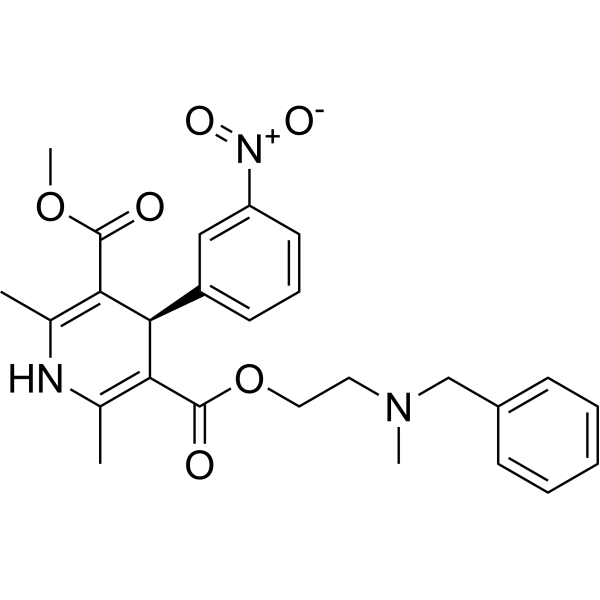 0 ImagesSynonyms: (R)-YC-93 free base(R)-Nicardipine ((R)-YC-93 free base) is the less active R enantiomer of Nicardipine. Nicardipine (YC-93) is a calcium channel blocker with an IC50 of 1 μM for blocking cardiac calcium channels. Nicardipine acts as an agent for chronic stable angina and for controlling blood pressure.
-
2',3'-Cyclic NADP disodium
 0 ImagesCat. No.: HY-137672ACAS No.: 100929-77-9Synonyms: 2',3'-cNADP+; β-Nicotinamide adenine dinucleotide-2',3'-cyclic phosphate2',3'-Cyclic NADP disodium (2',3'-cNADP+; β-Nicotinamide adenine dinucleotide-2',3'-cyclic phosphate) is a substrate for 2',3'-cyclic nucleotide 3'-phosphodiesterase (CNP), an enzyme abundant in myelin. It has been used in a coupled enzyme assay to quantify CNP activity. 2',3'-Cyclic NADP disodium (5 μM) increases calcium overload-induced calcium release and prevents calcium-induced swelling in rat brain mitochondria.
-
Spironolactone-d7
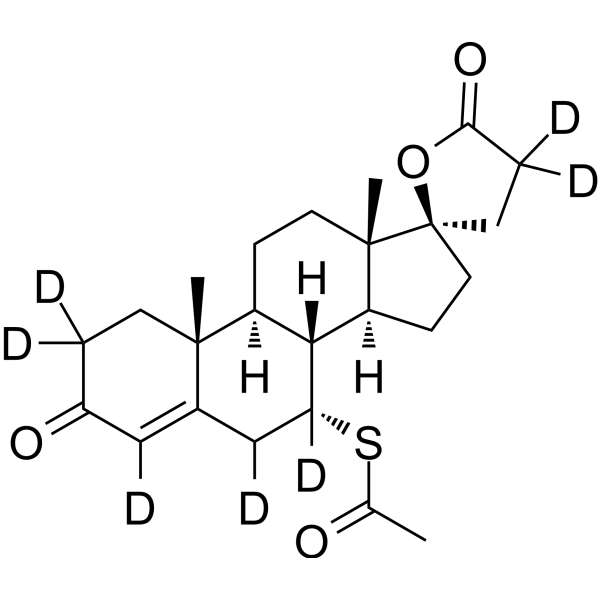 0 ImagesCat. No.: HY-B0561SPurity: 99.96%Synonyms: SC9420-d7Spironolactone-d7 is the deuterium labeled Spironolactone. Spironolactone (SC9420) is an orally active aldosterone mineralocorticoid receptor antagonist with an IC50 of 24 nM. Spironolactone is also a potent antagonist of androgen receptor with an IC50 of 77 nM. Spironolactone promotes autophagy in podocytes.




